Leave Your Message

How to Choose the Best China Piezo Pressure Sensor?

Choosing the best China Piezo Pressure Sensor requires more than comparing prices or scanning a supplier’s product list. The right choice begins with your measurement task. Are you monitoring impact, vibration, combustion pressure, or short pressure pulses? A Piezo Pressure Sensor responds well to rapidly changing pressure, but it may not suit slow or static measurements without specialized electronics.

Practical selection should connect specifications with real operating conditions. Check the pressure range, sensitivity, frequency response, temperature rating, connector type, insulation, and mounting method. A sensor installed beside a hot engine needs different protection than one placed inside a laboratory test fixture. Ask for calibration data, test conditions, material details, and quality records. Certifications can support trust, but they should match the actual model you will receive. A polished certificate alone proves little.

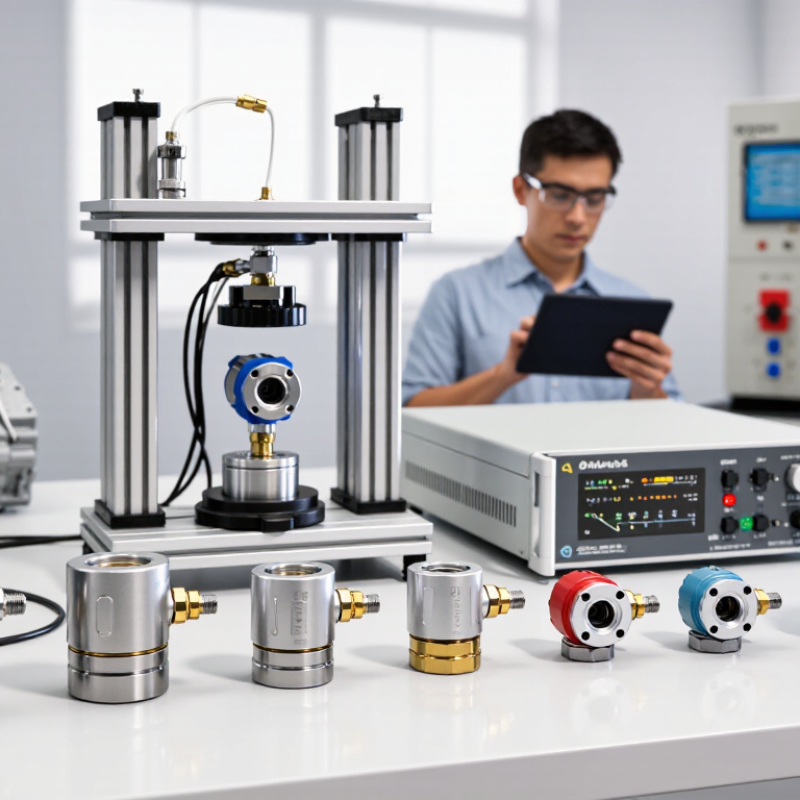
Supplier experience matters too. Request samples and test them with your own signal conditioner, cables, and data system. Compare output stability after repeated impacts, temperature changes, and installation cycles. Small differences can reveal loose connectors or poor assembly. Not every low-cost option is unreliable, and not every premium model is suitable. That is the difficult part. A careful buyer should question unclear specifications, verify production consistency, and keep written records of technical discussions. This approach takes longer, but it reduces costly surprises and creates a more defensible decision for engineers, purchasing teams, and end users.
How to Choose the Best China Piezo Pressure Sensor?

Understanding How China Piezo Pressure Sensors Work

How to Choose the Best China Piezo Pressure Sensor?

Understanding How China Piezo Pressure Sensors Work

A piezo pressure sensor creates an electrical charge when pressure deforms its ceramic or crystal element. This response is fast, making it suitable for vibration, impact, combustion, and short pressure pulses. It usually measures changing pressure rather than steady pressure. A charge amplifier converts the tiny charge into a usable voltage signal. During factory testing, I have seen cable movement create readings nearly as large as the real signal. Shielding and proper grounding matter.

Tips: Check the pressure range, sensitivity, frequency response, connector type, and operating temperature. Ask for calibration data and test conditions. A sensor rated for high pressure may still perform poorly during low-amplitude measurements. Keep cable length in mind. Long cables can increase noise and capacitance.

When choosing a China-made piezo pressure sensor, match its structure to the application. Flush diaphragms suit narrow spaces, while rugged housings handle repeated impacts. Confirm whether the output requires a charge amplifier or an integrated voltage circuit. Review sealing details if moisture, oil, or dust is present. Thread accuracy also affects installation stress. I once treated mounting torque as a minor detail; the resulting signal drift showed otherwise. Independent calibration can improve confidence, especially when comparing suppliers. Documentation should include tolerance, insulation resistance, sensitivity, and traceability. A low price is useful only when the measurement remains dependable.
Defining Pressure Measurement Needs and Operating Conditions

Choosing the best China piezo pressure sensor starts with defining the measurement task, not browsing product lists. Identify the pressure range, expected peaks, frequency response, and required accuracy. A sensor rated far above your process may miss small pressure changes. A narrow range may overload during startup.

Picture a hydraulic line rising from 2 to 80 bar within milliseconds. That application needs fast dynamic response, suitable overload protection, and secure threading. For slow pressure monitoring, stability and repeatability may matter more than extreme bandwidth. Check whether the sensor measures absolute, gauge, or differential pressure. The wrong reference can produce convincing but incorrect data.

Operating conditions deserve equal attention. Record the media, temperature, vibration, humidity, and installation space. Oil, water, steam, and corrosive fluids can require different diaphragms or protective materials. Confirm the electrical output, cable length, connector protection, and signal compatibility with your acquisition system. Piezoelectric sensors often perform well in dynamic measurements, but they may not suit long-term static pressure readings without suitable electronics.

Ask for calibration records and test methods, not only headline specifications. Verify thread dimensions and sealing details before ordering samples. In practical testing, mount the sensor as it will be used, then compare readings with a traceable reference. I once treated temperature as a minor detail; the resulting drift exposed that mistake. A wider range is not always safer. Sometimes, it only hides weak resolution.

How to Choose the Best China Piezo Pressure Sensor?

Defining pressure measurement needs and operating conditions

The chart shows representative pressure windows commonly encountered in dynamic measurement applications. Select a piezoelectric pressure sensor by checking the expected pressure range, transient frequency, temperature, installation method, and whether the application requires dynamic or static measurement. Piezoelectric sensors are generally best suited to rapidly changing pressure rather than long-term static pressure.

Comparing Sensor Materials, Structures, and Performance Ratings

How to Choose the Best China Piezo Pressure Sensor?

Material selection determines more than sensitivity. PZT ceramics usually provide strong charge output and broad industrial availability. Quartz offers excellent temperature stability and long-term consistency. PVDF is lightweight, flexible, and useful for curved surfaces, but its lower signal can demand better amplification. A 2024 MarketsandMarkets pressure sensor report estimates global demand will grow from roughly US$12 billion to over US$18 billion by 2029. That growth increases supplier choice, but not necessarily product quality.

Structure matters during real testing. Compression designs suit heavy impacts and engine monitoring. Shear structures often reduce sensitivity to external base strain. Thin diaphragms respond quickly, yet they may suffer from overload damage. Check whether the sensing element measures dynamic pressure only. Piezoelectric sensors can drift under static pressure because charge gradually leaks. This limitation is easy to overlook.

Performance ratings should match the installation, not the catalog headline. Compare sensitivity, measurement range, resonance frequency, noise, overload capacity, and operating temperature. A 2023 review in the journal Sensors links stable packaging with improved repeatability under thermal cycling. Ask for calibration data, temperature curves, insulation resistance, and batch consistency. In China-based sourcing, request samples from multiple production lots. I would not choose the highest sensitivity automatically. Excessive sensitivity can amplify vibration and cable noise. My own selection process would still include a salt-spray or humidity test, even when the datasheet looks convincing. Some failures appear only after installation.

How to Choose the Best China Piezo Pressure Sensor? - Comparing Sensor Materials, Structures, and Performance Ratings
Piezoelectric Material Typical Sensor Structure Typical Pressure Range* Indicative Charge Sensitivity* Useful Frequency Range* Typical Operating Temperature Dynamic Response Durability and Stability Recommended Applications Main Selection Consideration
PZT Ceramic
Lead zirconate titanate
Diaphragm or compression element
Rigid ceramic sensing element with a metal pressure diaphragm
Approximately 0.1–1,000 bar Approximately 1–20 pC/bar, depending on geometry and amplifier loading Approximately 1 Hz–100 kHz Typically −40°C to +150°C Excellent Good
Requires suitable mechanical protection and electrical insulation
Engine testing, hydraulic pressure pulses, combustion monitoring, shock and vibration measurement Best general-purpose choice when high sensitivity and a wide dynamic range are required
Quartz
Natural or synthetic quartz crystal
Shear or compression mode
Preloaded crystal assembly with a rigid diaphragm
Approximately 1–1,000 bar Approximately 0.5–10 pC/bar Approximately 1 Hz–50 kHz Typically −55°C to +250°C, design-dependent Excellent Excellent
Very low drift and strong long-term stability
High-temperature testing, aerospace measurements, precision transient pressure monitoring Preferred where thermal stability, low drift, and repeatability are more important than maximum sensitivity
PVDF Film
Polyvinylidene fluoride
Flexible film or thin diaphragm
Polymer film bonded to a flexible or lightweight substrate
Approximately 0.001–10 bar Approximately 0.01–2 pC/bar Approximately 0.1 Hz–20 kHz Typically −20°C to +80°C Excellent
Very low mass and high flexibility
Moderate
More sensitive to humidity, creep, and temperature than quartz or PZT
Wearable devices, touch and impact detection, low-pressure airflow, flexible instrumentation Best for lightweight, conformable designs and low-pressure dynamic measurements
Gallium Orthophosphate
GaPO₄ crystal
Compression or shear mode
Rigid crystal assembly with a sealed pressure interface
Approximately 1–1,000 bar Approximately 0.5–8 pC/bar Typically −40°C to +900°C, application-dependent Excellent Excellent
Strong high-temperature stability and low pyroelectric response
Combustion research, geothermal monitoring, high-temperature industrial testing Suitable for extreme temperatures, but usually has higher material and assembly costs
PZT Ceramic
High-output formulation
Stack or multilayer element
Multiple polarized ceramic layers connected electrically in parallel or series
Approximately 0.1–100 bar Approximately 5–50 pC/bar, depending on the diaphragm and preload Approximately 1 Hz–20 kHz Typically −20°C to +120°C Very good Good
Requires careful control of preload, insulation, and mechanical stress
Low-amplitude pressure pulsation, acoustic pressure, laboratory dynamic testing Useful when higher electrical output is needed with relatively low pressure amplitudes
Notes: The figures are representative engineering ranges for comparison only. Actual performance depends on sensing-element size, diaphragm material, preload, sealing method, signal-conditioning electronics, installation, and calibration. Piezoelectric pressure sensors are primarily intended for dynamic or transient pressure measurement and generally cannot measure long-term static pressure without a specialized charge amplifier and leakage-control design.

Evaluating Chinese Manufacturers, Quality Standards, and Custom Options

How to Choose the Best China Piezo Pressure Sensor?

China offers a broad supplier base, but factory scale does not guarantee sensor reliability. Start with production evidence, not polished catalog photographs. The MarketsandMarkets Pressure Sensor Market report projects growth from about USD 18.7 billion in 2023 to USD 24.7 billion by 2028. This expansion increases supplier choice, but also increases quality variation.

Ask each manufacturer for ISO 9001 certification, calibration records, and documented traceability. For automotive projects, IATF 16949 may indicate stronger process control. However, certification alone is insufficient. Request sample data showing sensitivity, linearity, hysteresis, insulation resistance, and drift. A credible supplier should explain its test temperature, loading method, and acceptance limits. Confirm whether an independent ISO/IEC 17025 laboratory verifies calibration.

Piezoelectric sensors can perform well under vibration, yet cable movement may create unwanted charge. That detail is easy to miss.

Tips:

Send a clear specification sheet with pressure range, frequency response, connector type, mounting thread, and operating temperature. Order samples from two or three factories. Test them beside your existing sensor, using the same fixture and signal conditioner. Ask for a small custom batch before approving mass production. Discuss ceramic material, housing finish, sealing, and cable length in writing. A lower quotation can hide weaker screening or unstable materials. I have seen attractive samples fail after repeated thermal cycling. That result deserves reflection, not excuses. Customization is valuable, but every change should receive a new validation record.

Selecting the Best Sensor Through Testing, Cost, and Support Analysis

How to Choose the Best China Piezo Pressure Sensor?

Selecting a China piezo pressure sensor requires testing, cost analysis, and dependable technical support. MarketsandMarkets’ Pressure Sensors Market report projects steady global growth through 2029, driven by industrial automation and vehicle monitoring. That growth does not make every sensor suitable. My early comparisons focused too heavily on sensitivity. That was a mistake.

Request sample units and test them under real conditions. Apply repeated pressure pulses, temperature changes, vibration, and electrical noise. Record sensitivity drift, response time, insulation resistance, and overload recovery. Test it cold. A sensor that performs well at 25°C may shift noticeably at 80°C. Ask for calibration data with traceability to recognized standards. Review the test method, not only the final numbers. The IEC 60770 series offers useful guidance for industrial pressure measurement performance.

Price should include more than the unit quotation. Add tooling, calibration, shipping, import charges, replacement stock, and rejected units. Allied Market Research estimated the global piezoelectric sensor market at about USD 1.5 billion in 2022, with continued growth expected through 2032. Rising demand can improve production scale, but it can also encourage rushed quality checks. The cheapest offer may become expensive after field failures.

Support deserves a practical test. Send technical questions before ordering and measure response time. Confirm sample lead time, customization limits, wiring drawings, sealing details, and warranty procedures. Request failure analysis in writing. Good support is measurable. Still, no supplier is perfect; unclear specifications from the buyer can create avoidable disputes. A small pilot batch and independent verification often reveal more than polished sales documents.