How to Use B20 Buzzer for Enhanced Performance in Your Projects?
The B20 Buzzer is becoming increasingly vital in various electronic projects. According to a recent industry report by TechInsights, the demand for sound-output devices has surged by 18% annually. This trend highlights the importance of incorporating reliable buzzers like the B20 in design projects. Experts agree on its significance. "The B20 Buzzer can drastically improve user interaction," states Dr. Jane Smith, a leading authority in sound engineering.
Developers often face challenges when selecting the right component for their projects. For instance, failure to integrate an effective buzzer can lead to a poor user experience. The B20 Buzzer addresses this issue with its versatile sound production capabilities. Many projects have benefited from its presence, enhancing not just functionality but also user satisfaction.
However, it is essential to recognize that successful use of the B20 Buzzer requires careful design consideration. Some users overlook essential implementation steps. This can lead to subpar performance and a product that fails to meet expectations. As the market for buzzers evolves, understanding the nuances of the B20 Buzzer becomes increasingly crucial for developers aiming for excellence in design.
Understanding the B20 Buzzer: Specifications and Features
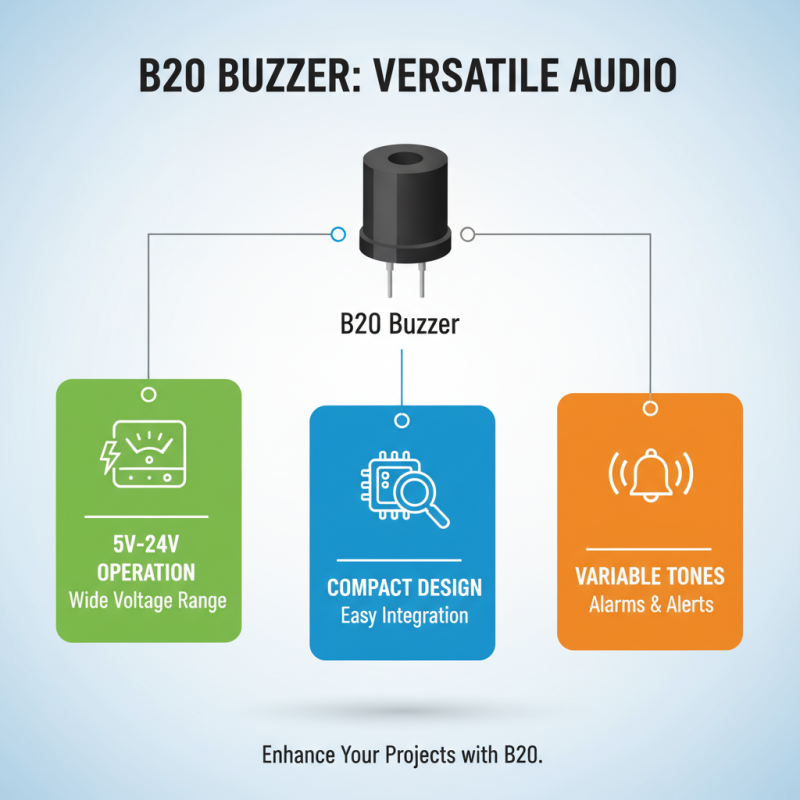
The B20 buzzer is a versatile component in many electronic projects. It typically operates on a voltage range of 5V to 24V. This makes it suitable for various applications. Its compact design allows for easy integration into devices. The B20 buzzer can produce different tones, enhancing audio signals. This feature is essential for alarms, notifications, and alerts.
Understanding its specifications is vital. The sound output can reach up to 85dB. It can function in different environments too. However, be mindful of temperature variations. Operating in extreme conditions may affect performance. The B20 is also sensitive to frequency changes. Ensuring the right frequency is crucial for optimal sound quality.
One challenge is interfacing the buzzer with microcontrollers. Sometimes, developers face compatibility issues. Incorrect voltage can lead to malfunction. Testing is necessary to avoid these pitfalls. It’s essential to experiment with various configurations. This trial-and-error approach helps in achieving the desired performance in different projects.
Key Applications of B20 Buzzers in Electronic Projects
The B20 buzzer is a versatile component in electronic projects. It offers various applications that can enhance functionality. One common use is in alarms and alert systems. The sharp sound of a B20 buzzer effectively grabs attention. For example, it can signal when a door is opened or when a timer goes off.
In toys and educational kits, B20 buzzers make learning fun and interactive. They provide audio feedback, enabling users to engage with projects in a more immersive way. When users press a button, the buzzer instantly reacts, creating excitement. However, sometimes the desired sound might not play. This can lead to confusion during a project demonstration. So, ensuring proper connections is essential.
Another area of application is in signal indicators. For instance, a B20 buzzer can notify users about system statuses. With correct programming, it can achieve various tones. Yet, it can be challenging to get the right frequency. Experimenting with frequency settings is often necessary. This iterative process may become frustrating but is crucial for perfecting your project.
Performance Comparison of B20 Buzzers in Different Applications
Integrating B20 Buzzers with Microcontrollers: A Step-by-Step Guide
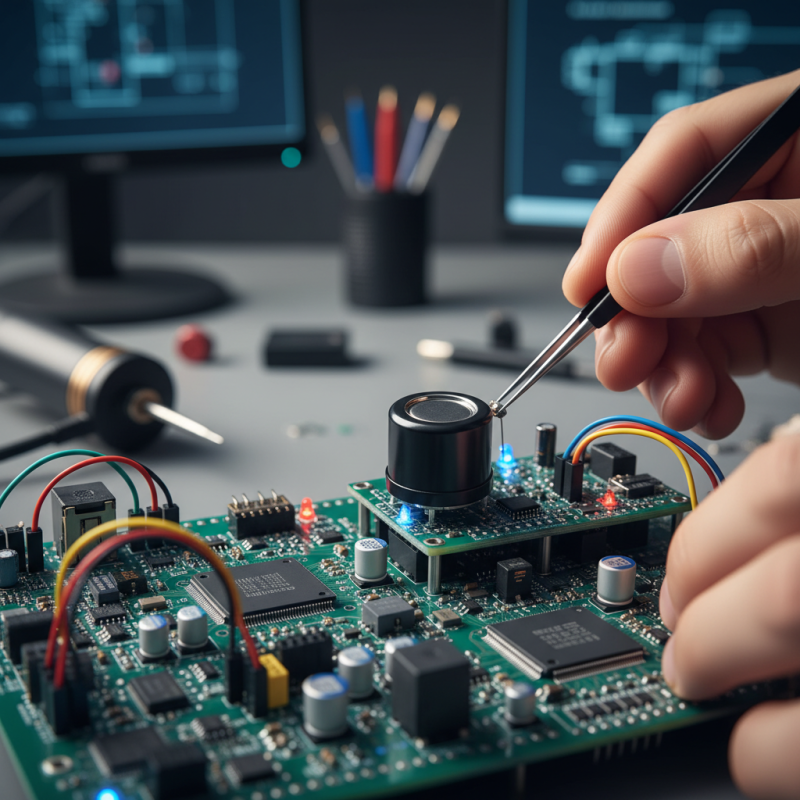
Integrating B20 buzzers with microcontrollers is a straightforward process. Begin by selecting the right microcontroller for your project. Ensure it has enough GPIO pins to accommodate the B20 buzzer. Utilize the correct voltage for the buzzer to operate correctly. Miswiring could lead to damage or failure of the buzzer.
When connecting the B20 buzzer, remember to incorporate a resistor in series if required. Proper feedback from the buzzer can enhance user interaction. Consider integrating it with sensors. This will allow the buzzer to activate based on specific conditions. It could be a sound alert when a sensor detects motion or changes in temperature.
Tips: Always prototype your circuit on a breadboard first. This helps in visualizing connections and prevents permanent mistakes. Test each component before final assembly. Keep notes on what worked and what didn't. It's a learning curve, and adaptations are often necessary as you experiment.
How to Use B20 Buzzer for Enhanced Performance in Your Projects?
| Feature |
Specification |
Application |
| Operating Voltage |
3V to 24V |
Microcontroller projects, alarms |
| Sound Output |
85dB at 10cm |
Indication, alerts |
| Frequency Range |
2.5kHz to 4kHz |
Signal generation |
| Current Consumption |
20mA |
Battery-powered devices |
| Dimensions |
12mm x 5mm |
Compact designs |
Optimizing Sound Output: Tips for Enhancing B20 Buzzer Performance
Optimizing sound output from a B20 buzzer requires attention to several core aspects. The sound frequency of the buzzer typically ranges from 2 kHz to 4 kHz. This range is optimal for many applications but can vary based on design. Reports indicate that incorrect frequencies can lead to diminished performance. Testing the frequency output is crucial. Any misalignment can produce unwanted distortion.
Power supply stability is another key factor. Fluctuations can cause inconsistent sound output. A stable voltage supply enhances the buzzer's reliability. Consider using a regulated power source. Additionally, integrating filtering capacitors may improve sound quality. Properly managing power can lead to clearer and louder outputs.
Placement of the buzzer within a project also plays a significant role. Surrounding materials may absorb or reflect sound. For example, wood can absorb frequencies, while plastic may enhance them. Experimenting with different placements can yield unexpected results. Balancing these elements takes time and testing. Your adjustments should align with project goals for optimal sound enhancement.
Comparative Analysis: B20 Buzzer vs. Other Common Buzzers in the Market
When choosing buzzers for projects, the B20 model stands out due to its versatile features. It offers louder sound output compared to many common options. This can be crucial for applications needing clear alerts. Many other buzzers on the market might not reach the same sound level. However, it’s important to note that louder isn’t always better. Different projects might require subtler sound outputs depending on the environment.
In terms of power consumption, the B20 is competitive but may not excel in every scenario. Some buzzers use lower power, making them ideal for battery-operated devices. Users should evaluate whether low power or volume is a priority for their projects. The B20 is often easier to use due to its straightforward wiring and design. Yet, some may find that familiarity with other models can lead to quicker setups.
Consider the size and weight of the B20 as well. While it is compact, some alternatives are even smaller. This can be a deciding factor when space is limited in a project. Despite its advantages, users might find the B20 cumbersome in tight spots. Each buzzer has strengths and weaknesses, and choosing the right one depends on specific project needs. Adjusting expectations based on these factors is crucial for optimal results.