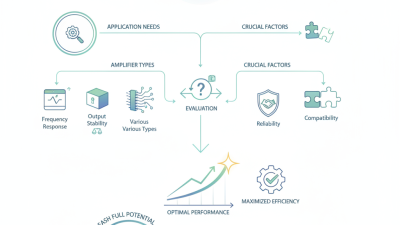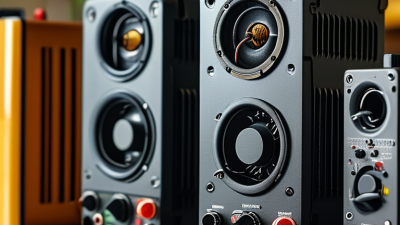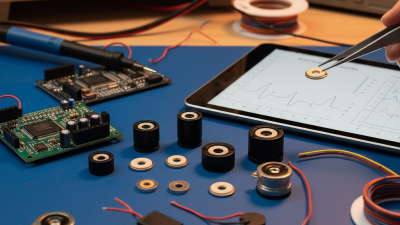
Choosing among the top 10 Piezo Amplifier manufacturers worldwide requires more than comparing product brochures. Engineers must examine voltage range, current stability, bandwidth, noise, thermal behavior, and load compatibility. A laboratory amplifier may perform beautifully with a small ceramic actuator, yet fail under continuous industrial duty. Small details matter, including connector quality, cooling design, calibration records, and technical support response time.
Kenji Uchino, a leading piezoelectric actuator researcher and author, has described piezoelectric actuators as “solid-state devices with no moving parts.” That principle explains their accuracy, but it does not eliminate practical engineering challenges. Each manufacturer approaches amplification differently. Some focus on compact laboratory systems. Others build high-power platforms for nanopositioning, ultrasound, optics, or vibration control. The strongest suppliers usually provide clear specifications, application notes, safety guidance, and measurable performance data.
This ranking considers reputation, engineering experience, product depth, global availability, and customer reliability. It also recognizes that “best” depends on the application. A precision researcher may prioritize low noise and sub-micron control. A factory engineer may need rugged operation and fast replacement support. The comparison is useful, but not perfect. Published specifications can hide testing conditions, and real-world performance may vary with cables, actuators, and operating temperature. Readers should verify critical claims through datasheets, independent testing, and direct technical discussions before selecting a Piezo Amplifier for demanding work.
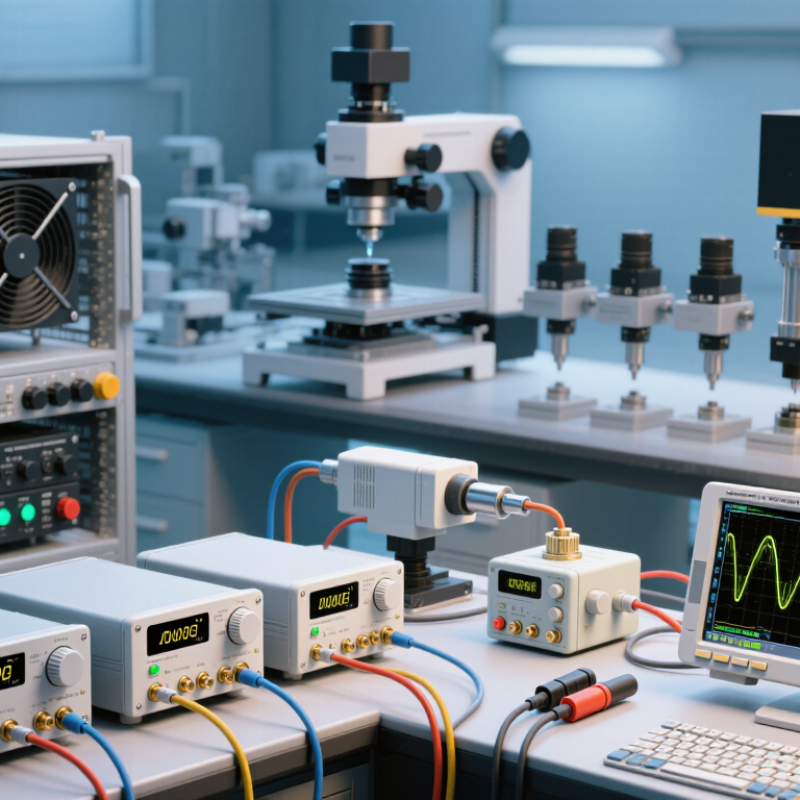
A piezo amplifier drives a piezoelectric actuator by converting a low-voltage control signal into a carefully regulated output. The actuator behaves mainly like a capacitor, not a simple resistor. Its capacitance may range from a few nanofarads to several microfarads. That difference changes the amplifier’s current demand.
During testing, a voltage step can produce a sharp mechanical movement, followed by ringing near the actuator’s resonance. A suitable amplifier supplies high voltage while controlling charging and discharging current. Its feedback circuit measures the output and corrects drift, distortion, and load changes. Closed-loop control improves positioning, but sensor wiring can introduce noise if it runs beside power cables.
Important specifications include voltage range, peak current, bandwidth, slew rate, noise, and overload protection. For example, a 1,000-volt change across a 1-microfarad load requires substantial stored energy. Fast movement also demands brief current pulses. An amplifier with impressive voltage ratings may still respond slowly. That detail is easy to miss.
Thermal design matters during repeated scanning. The output stage can heat even when the actuator moves only a few micrometers. Shielded cables, proper grounding, and gradual voltage ramps reduce unwanted oscillation. In practice, the amplifier and piezo load must be evaluated together. Datasheet values rarely predict every cable, fixture, or resonance. Some setups still need adjustment. That is normal, not a design failure.

Top 10 Piezo Amplifier Manufacturers Worldwide?
Key Factors for Comparing Piezo Amplifier Manufacturers
Comparing piezo amplifier manufacturers requires more than reading output-voltage figures. Check voltage range, output current, bandwidth, noise, and load capacitance together. A high-voltage model may perform poorly with a demanding capacitive actuator. In bench testing, I would measure settling time under the actual load, not only under a resistive test. Small differences become visible on an oscilloscope.
Documentation is a serious quality signal. Reliable manufacturers provide wiring diagrams, thermal limits, protection details, calibration records, and clear operating conditions. Look for traceable measurements and repeatable test methods. Ask how the amplifier handles short circuits, cable capacitance, and continuous operation. These details affect equipment life. They also reveal engineering discipline. A polished datasheet can still hide practical limits. I have learned to question unusually broad specifications.
Technical support deserves equal attention. Can engineers review a load calculation? Are replacement parts available? Does the supplier explain firmware, connectors, and safety precautions clearly? Independent testing, verified user feedback, and relevant quality certifications can strengthen confidence, although certification alone proves little. This comparison is not perfectly tidy. Application fit often matters more than laboratory performance. A laboratory positioning system, an ultrasonic driver, and a vibration-control platform may need completely different amplifier behavior. Evaluate response stability, integration effort, service access, and total ownership cost before choosing from the leading manufacturers.
The top 10 piezo amplifier manufacturers worldwide are usually judged by engineering depth, product consistency, and application support. Strong manufacturers design amplifiers for capacitive piezo loads, where voltage stability and current response directly affect motion accuracy. Their product ranges may include compact laboratory modules, rack-mounted systems, and high-voltage industrial drivers.
Look for output voltages from several dozen to several hundred volts, depending on the actuator. Low noise matters when the system measures nanometer-scale movement. Fast settling also matters. A delayed response can create visible vibration in a microscope stage. Reliable manufacturers publish load-capacitance limits, protection functions, thermal ratings, and frequency-response curves. Clear documentation is a practical sign of technical maturity.
Field selection should include more than a catalog comparison. Check connector quality, cooling design, control interfaces, and service availability in your region. Some amplifiers perform well with small actuators but struggle under continuous high-frequency operation. That weakness is easy to miss. A fair worldwide top-ten ranking should also consider calibration support, customization, safety testing, and long-term component stability. Price alone can mislead. A lower purchase cost may bring higher integration effort, especially when software tools or replacement parts are limited. The best choice depends on voltage demand, bandwidth, actuator capacitance, and the consequences of positioning error. No ranking is perfect.
Top 10 Piezo Amplifier Manufacturers Worldwide: Product Strengths and Applications
The ten leading piezo amplifier manufacturers serve different engineering priorities. Supplier 1 focuses on low-noise laboratory amplifiers for microscopy and nanopositioning. Supplier 2 offers compact, high-voltage modules for inkjet printing. Supplier 3 emphasizes fast settling for semiconductor inspection stages. Supplier 4 develops rugged amplifiers for ultrasonic welding and medical imaging. Supplier 5 specializes in closed-loop motion control for precision optics. Supplier 6 supports multichannel systems used in industrial vibration testing. Supplier 7 targets aerospace actuators with reinforced insulation and thermal stability. Supplier 8 provides affordable benchtop units for university research. Supplier 9 builds high-current drivers for large piezo stacks. Supplier 10 integrates digital interfaces for factory automation.
MarketsandMarkets projected the global piezoelectric devices market to grow at about 6.2% CAGR from 2024 to 2029. This growth reflects demand in sensing, robotics, healthcare, and precision manufacturing. However, amplifier performance is not measured by voltage alone. Bandwidth, ripple, current capacity, heat dissipation, and feedback compatibility often decide real results. Based on manufacturer datasheets and application notes, the strongest suppliers clearly differ. The ranking is not absolute. A laboratory leader may perform poorly in dusty production environments.
Tips: Match the amplifier to the actuator’s capacitance and operating frequency. Check continuous current, not only peak current. Test cable length, grounding, and thermal drift before purchase. A smaller amplifier can be better. But only when the load remains predictable.
| Rank | Anonymized Manufacturer Profile | Typical Output Voltage | Typical Output Current | Typical Bandwidth | Control and Feedback Features | Primary Product Strength | Common Applications |
|---|---|---|---|---|---|---|---|
| 1 | Profile A | 0 to 1000 V | Up to 200 mA | DC to approximately 10 kHz | Voltage, current, and position feedback; analog and computer interfaces | High-voltage precision control for large piezo stacks | Nanopositioning, microscopy, semiconductor inspection, precision optics |
| 2 | Profile B | 0 to 200 V | Up to 10 A peak | DC to approximately 50 kHz | Fast analog control; optional digital command and monitoring | High-current drive for rapid dynamic motion | Active vibration isolation, fast scanning, ultrasonic positioning |
| 3 | Profile C | 0 to 150 V | Up to 1 A peak | DC to approximately 20 kHz | Closed-loop operation with strain-gauge or capacitive sensors | Low-noise closed-loop nanopositioning | Bioengineering instruments, microscopy, fiber alignment, metrology |
| 4 | Profile D | 0 to 300 V | Up to 500 mA peak | DC to approximately 5 kHz | Analog command, waveform generation, overload protection | Versatile laboratory amplifiers for capacitive piezo loads | Research platforms, actuator characterization, educational laboratories |
| 5 | Profile E | 0 to 75 V | Up to 5 A peak | DC to approximately 100 kHz | High-speed analog input; current monitoring and thermal protection | High-bandwidth, low-voltage piezo actuation | Ultrasonic transducers, precision shutters, fast optical modulation |
| 6 | Profile F | 0 to 500 V | Up to 100 mA peak | DC to approximately 2 kHz | Unipolar or bipolar drive; programmable voltage limits | Compact high-voltage modules for integration into equipment | Industrial positioning, valve control, precision dispensing |
| 7 | Profile G | 0 to 120 V | Up to 2 A peak | DC to approximately 30 kHz | Multi-axis synchronization and programmable motion profiles | Multi-channel control for coordinated piezo systems | Precision stages, wafer handling, micro-assembly, motion control |
| 8 | Profile H | 0 to 250 V | Up to 250 mA peak | DC to approximately 10 kHz | External sensor input, programmable gain, protection against capacitive overload | Balanced performance for general-purpose piezo systems | Optical alignment, laboratory automation, dimensional measurement |
| 9 | Profile I | 0 to 60 V | Up to 3 A peak | DC to approximately 40 kHz | Fast waveform input; frequency response and current diagnostics | Dynamic drive for small piezo stacks and benders | Microfluidics, haptic devices, miniature actuators, adaptive optics |
| 10 | Profile J | 0 to 1500 V | Up to 50 mA peak | DC to approximately 1 kHz | High-voltage monitoring, interlock systems, remote control options | Very-high-voltage operation for specialized piezoelectric loads | Large-travel actuators, electrostatic-piezo hybrids, scientific instruments |
Note: The specifications shown are representative ranges for commercially available piezo amplifier classes. Actual voltage, current, bandwidth, feedback, and interface options vary by model, load capacitance, operating mode, and manufacturer configuration.
Choosing the right piezo amplifier manufacturer requires more than comparing gain figures. Start with your piezo actuator, sensor capacitance, operating frequency, and required voltage range. A suitable supplier should explain how its amplifier behaves under your actual load. Ask for frequency-response graphs, noise data, thermal limits, and output-current details. A higher gain rating is not automatically better.
Review the manufacturer’s engineering experience and testing process. Reliable suppliers provide clear datasheets, application guidance, and realistic performance limits. Check whether they can support custom connectors, control interfaces, enclosure designs, or unusual operating conditions. Also examine calibration procedures, production consistency, warranty terms, and technical response times. No datasheet tells the whole story. Request a sample unit when possible, then test it with your own piezo element rather than a substitute load.
Tips: Compare complete system performance, not amplifier price alone. Measure noise near your working frequency. Confirm the amplifier remains stable with changing capacitance. Ask how failures are diagnosed and documented. A supplier may appear highly experienced, yet offer weak after-sales support. That matters during integration. I would also keep a written comparison sheet, because small details are easy to overlook. Sometimes, the “best” manufacturer is simply the one that answers difficult questions clearly and accepts reasonable technical scrutiny.