Top Piezo Diaphragm Applications and Benefits You Should Know?
In recent years, the importance of the Piezo Diaphragm has surged across various industries. This technology offers many advantages, primarily due to its efficiency and versatility. A Piezo Diaphragm converts electrical energy into mechanical movement. This feature makes it valuable in numerous applications.
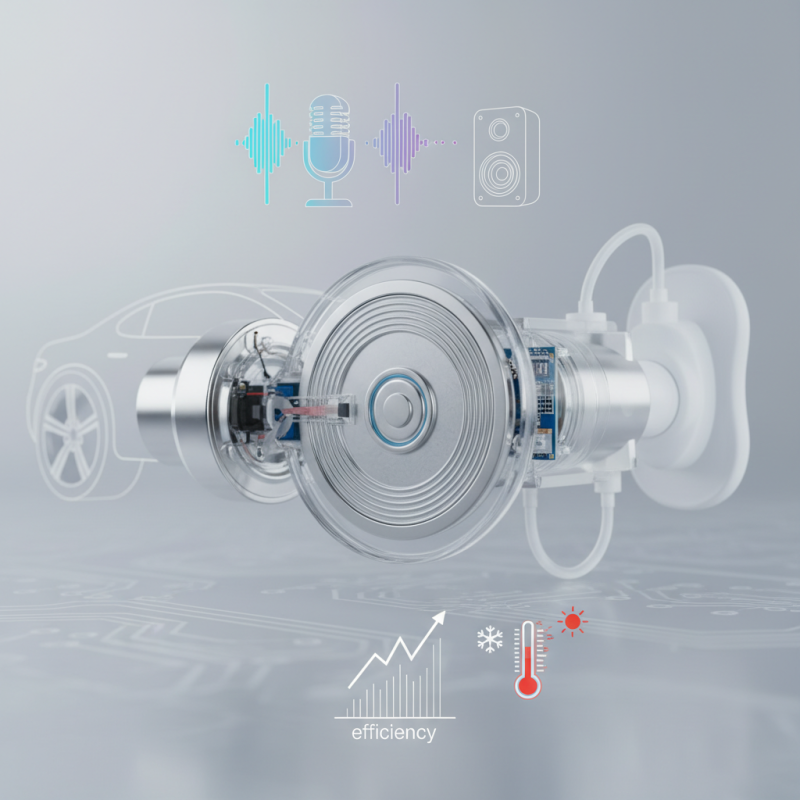
One major benefit is its compact size. It allows for integration in tight spaces. Manufacturers are increasingly using Piezo Diaphragms for sensors and actuators in automotive and medical devices. Their reliability enhances performance while reducing maintenance costs. Beyond this, Piezo Diaphragms also demonstrate high responsiveness. This characteristic is crucial in sound technology, such as microphones and speakers.
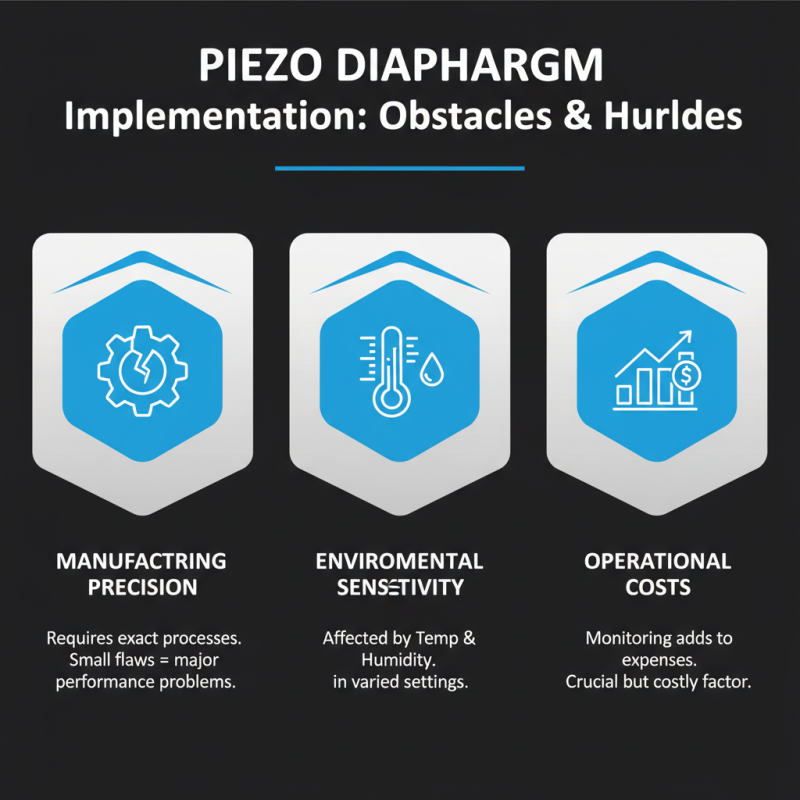
However, challenges exist, too. While the technology is powerful, it can be sensitive to temperature changes. This can affect performance in extreme conditions. Companies must consider environmental factors when implementing Piezo Diaphragms. Overall, understanding these applications and benefits is essential for making informed decisions.
Key Characteristics of Piezo Diaphragms in Various Applications
Piezo diaphragms are vital components in many industries. Their key characteristics make them well-suited for various applications. These include high-frequency response and compact size. They can produce sound or vibrations in devices like speakers and buzzers. Their lightweight nature reduces energy consumption, making them efficient options.
In medical devices, piezo diaphragms are essential. They help with ultrasound imaging by converting electrical signals into sound waves. This process requires precision and reliability, where imperfections can lead to diagnostic errors. Engineers must carefully consider the materials used to maintain performance.
Tips: Choose the right diaphragm material for your application. Different materials will affect sensitivity and durability. Testing prototypes is crucial since even small design flaws can lead to larger issues in deployment. Regular maintenance and inspection of devices using piezo diaphragms can prevent unexpected failures.
Common Applications of Piezo Diaphragms Across Industries
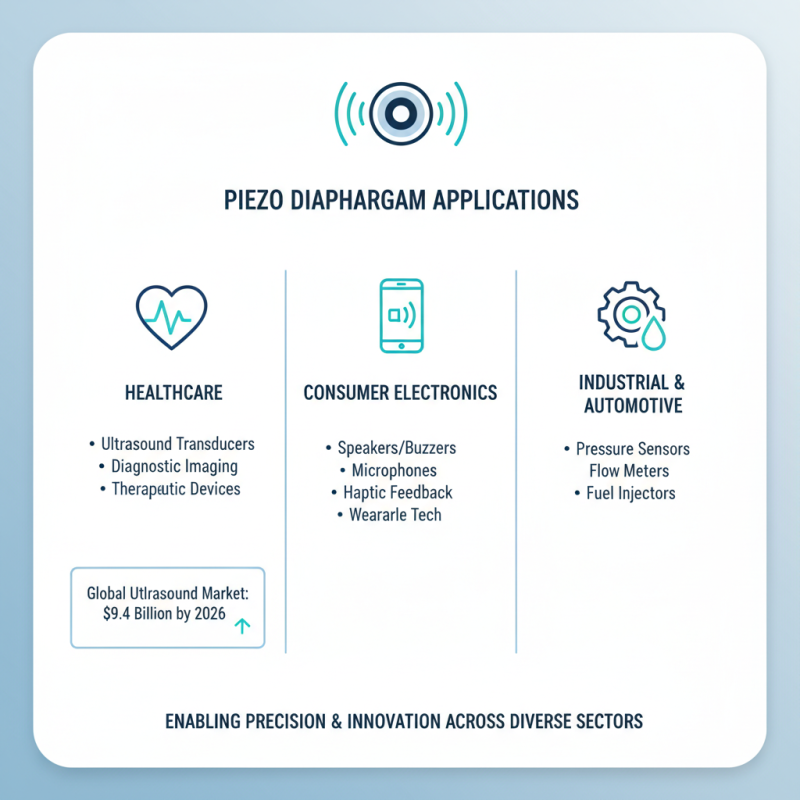
Piezo diaphragms play a crucial role across various industries. Their applications range from healthcare to consumer electronics. In medical devices, for instance, they are indispensable for ultrasound transducers. According to a recent report, the global ultrasound equipment market is projected to reach $9.4 billion by 2026. This growth illustrates the increasing reliance on piezo technology in diagnostics.
In the automotive sector, piezo diaphragms enhance fuel injection systems. They enable precise control of fuel flow, improving efficiency. A study suggested that optimized fuel systems can boost engine performance and reduce emissions significantly. These improvements are more critical than ever, considering the ever-tightening environmental regulations worldwide.
However, challenges remain. The reliability of piezo materials can vary, impacting performance in demanding situations. Some applications require extensive testing to ensure longevity and stability. Industry experts warn that improper use may lead to failures, which can disrupt production lines. Balancing innovation and reliability remains a hurdle that many manufacturers face.
Advantages of Utilizing Piezo Diaphragms in Modern Technology
Piezo diaphragms are increasingly vital in various modern applications. These components convert electrical energy into mechanical movements. It’s a process that enhances functionality in many devices. One significant advantage is their ability to produce precise movements. This characteristic leads to improved accuracy in applications like sensors and actuators.
The compact size of piezo diaphragms is another benefit. They take up minimal space, allowing for easier integration into designs. Many devices, from smartphones to medical equipment, leverage this small footprint. However, designers must consider limitations in their output range. Misalignment or inadequate design can hinder performance. Employing piezo diaphragms necessitates careful analysis to maximize their potential benefits.
In terms of energy efficiency, piezo diaphragms excel. They enable devices to operate effectively without consuming excessive power. This efficiency can result in longer battery life for portable gadgets. Yet, there remain challenges in cost and material selection. Achieving a balance between cost-effectiveness and performance is essential. Thoughtful design choices are necessary to overcome these hurdles and fully utilize piezo technology.
Top Piezo Diaphragm Applications and Benefits You Should Know
| Application |
Benefits |
Description |
| Medical Devices |
High precision, compact size |
Used in ultrasound imaging and patient monitoring devices for precise measurements. |
| Actuators |
Fast response time, high reliability |
Applied in robotics and automation systems for rapid movements and precision control. |
| Audio Equipment |
Enhanced sound quality, lightweight |
Used in speakers and microphones to improve acoustics and sound reproduction. |
| Sensors |
High sensitivity, small footprint |
Employed in various sensing applications, such as pressure and vibration sensors. |
| Consumer Electronics |
Compact design, low power consumption |
Incorporated in touchscreens and haptic feedback devices for enhanced user experience. |
Future Trends in Piezo Diaphragm Innovations and Applications
The future of piezo diaphragm technology is exciting. Innovations are transforming various industries. These diaphragms can convert mechanical energy into electrical energy efficiently. They can be found in sensors, actuators, and medical devices.
Increasing demand for compact and lightweight designs drives innovation. Companies are exploring materials that enhance performance. New fabrication techniques lead to more durable products. Partnerships between researchers and manufacturers boost development efforts. It's a rapidly evolving field with countless possibilities.
Tips: Always consider the application requirements when choosing a piezo diaphragm. Assess performance, size, and energy needs carefully. Engaging with experts may lead to valuable insights. Keep abreast of the latest technological trends to remain competitive. Experimentation can lead to unexpected, effective solutions too. Being adaptable is key in this realm. Continuous learning brings improvements.
Top Piezo Diaphragm Applications and Benefits