2026 How to Choose the Best Piezo Load Cell for Your Needs?
Selecting the right Piezo Load Cell can be a challenging task. With a variety of options available, it’s crucial to understand your specific needs. These sensors convert force into an electrical signal. Their accuracy is vital in many applications, including industrial and scientific fields.
Different factors influence your choice. Load capacity, sensitivity, and environmental conditions are important. For instance, some Piezo Load Cells excel in high-stress environments, while others are designed for precision measurements. It’s essential to evaluate your operational requirements carefully.
Consider seeking expert advice when making your decision. Experienced professionals can provide insight on product specifications. However, it’s important to critically assess their recommendations. Not all options will suit your unique scenario. This reflection helps in making an informed choice for your application.
Understanding Piezo Load Cells: Basic Principles and Functionality
Piezo load cells are fascinating devices known for their ability to measure force and pressure with precision. They function based on the piezoelectric effect, where certain materials generate an electrical charge when mechanically stressed. This enables them to provide highly accurate readings in various applications, from industrial weighing systems to research experiments.
When selecting a piezo load cell, consider the environment. Extreme temperatures, humidity, or dust can affect performance. Choose a load cell that is rated for your specific conditions. This can prevent unexpected failures.
Tips: Always check the specifications. Look for details on sensitivity and range. These factors will determine if the load cell meets your requirements.
Calibration is essential. A load cell must be properly calibrated for accurate readings. An incorrectly calibrated load cell can lead to significant measurement errors. Regularly review calibration practices to ensure reliability.
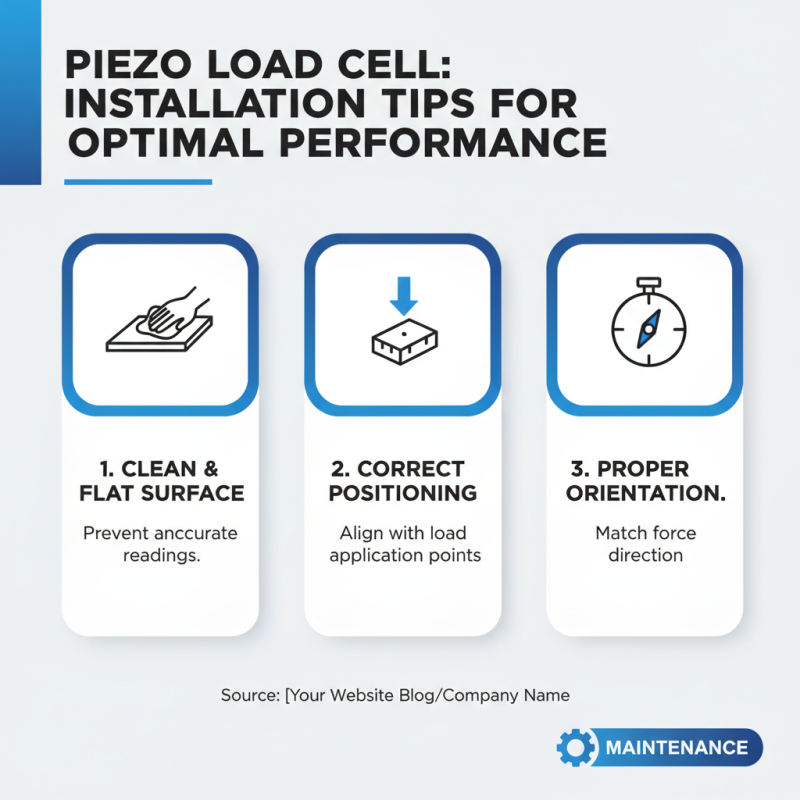
Pay attention to the mounting method. The way a load cell is installed can impact its function. Improper installation can lead to inaccurate results or even damage. Ensure that the load cell is securely mounted and aligned correctly for best performance.
Key Applications of Piezo Load Cells in Various Industries
Piezo load cells play a crucial role across various industries, thanks to their unique ability to measure dynamics forces with high precision. In manufacturing, these sensors excel in quality control processes. For instance, they ensure that products meet strict standards by testing materials under stress conditions. A recent report highlighted that over 30% of manufacturing firms rely on piezo load cells for real-time testing and monitoring.
In the automotive industry, piezo load cells are integral to crash testing and vehicle dynamics studies. They provide valuable data on the impact forces vehicles endure during collisions. This data is essential for improving safety features. According to industry research, implementing advanced load cell technology has improved safety ratings by nearly 15% in recent years. Their compact design and fast response times make them ideal for these challenging environments.
The aerospace sector also benefits significantly from piezo load cell applications. They are utilized for structural testing of components and systems, providing critical feedback on performance. However, selecting the right load cell can be complex due to varying environmental factors. Not all sensors perform well under extreme conditions, making thorough research essential. As industries continue to evolve, understanding the specific applications of piezo load cells will become increasingly important for engineers and designers.
Factors to Consider When Choosing a Piezo Load Cell
When selecting a piezo load cell, several key factors should guide your decision. The first consideration is sensitivity. Different applications require varying levels of sensitivity. A highly sensitive load cell captures even slight changes in force, making it ideal for precision tasks. However, overly sensitive cells might give inconsistent readings in noisy environments. Balancing sensitivity with reliability is crucial.
Response time is another important aspect. Piezo load cells can respond swiftly to changes in load, which is vital for dynamic applications. However, too fast a response can lead to misinterpretation of transient loads. It’s essential to determine the response time that suits your application’s needs without compromising accuracy.
Additionally, consider the temperature range within which the load cell will operate. Extreme temperatures can affect measurements, possibly leading to inaccuracies. Assessing environmental factors is necessary to ensure the chosen load cell performs consistently. Remember, your selection should reflect your specific needs and conditions. A well-informed choice will enhance reliability in your measurements.
Evaluating Accuracy and Precision in Piezo Load Cells
When evaluating piezo load cells, accuracy and precision are critical factors. According to a recent industry report, inaccuracies in measurements can lead to significant errors in testing processes. For example, a deviation of just a few milligrams can alter the outcome of high-precision applications. A well-calibrated piezo load cell can achieve accuracies of up to 0.1% under optimal conditions, which is essential in fields that require stringent standards.
Precision, on the other hand, refers to the consistency of repeated measurements. Studies have shown that using a load cell with insufficient precision can lead to reproducibility issues. Data indicates that load cells designed for dynamic or static loads can exhibit different performance. Selecting a load cell meant for the specific application can ensure that precision remains high, maintaining reliability for continuous testing.
While piezo load cells offer many advantages, there are limitations. Environmental factors like temperature fluctuations can impact performance. Any piezoelectric sensor's response can degrade over time, especially under heavy loads. It's crucial to periodically assess these components. Regular maintenance and recalibration can enhance longevity and performance, ensuring that the error margins stay within acceptable limits.