China Top Electric Buzzer Circuit Diagram for Global Buyers?
In the rapidly evolving world of electronics, the demand for affordable and effective solutions is on the rise. Among these, the "Electric Buzzer Circuit Diagram" stands out as a crucial component in various applications, from alarms to notifications. Expert in electronic design, Dr. Emily Zhao, once noted, "An efficient circuit diagram can make or break a project's success." This highlights the importance of understanding the basic wiring and functionality of buzzers.
The design of an Electric Buzzer Circuit Diagram is not only about technical accuracy but also about usability. It effectively bridges the gap between complex theories and practical applications. Many buyers seek clarity in this space, making a diagram that is easy to comprehend essential. However, achieving simplicity in design while maintaining functionality can be challenging.
As global buyers search for quality and reliability, they often find inconsistencies in circuit designs. This reflects a broader issue where variation in diagrams can lead to misapplication. Creating a universal Electric Buzzer Circuit Diagram requires collaboration and continual refinement. It is vital for designers to address these issues and focus on providing reliable, clear, and valuable resources.

Overview of Electric Buzzer Circuit Diagrams in China
Electric buzzers are widely used in various applications across industries. They serve as crucial alert systems in devices and machinery. Understanding the circuit diagrams for electric buzzers is essential for global buyers looking to harness this technology.
In China, electric buzzer circuit diagrams typically include several components: resistors, capacitors, and transistors. These elements work together to produce sound. A simple circuit often consists of a power source, a buzzer unit, and control switches. When designing or troubleshooting, attention to details like voltage ratings and connections is vital.
Tips: Check the compatibility of components. Ensure your power supply matches the buzzer specifications. An incorrect match can lead to malfunction.
Many circuit diagrams are accessible online. However, not all are reliable. Validating information through multiple sources helps avoid mistakes. A small error in the circuit can lead to unexpected behavior. Consider consulting experts when unsure.
Key Components of Electric Buzzer Circuits
Electric buzzer circuits consist of several essential components. Each part plays a crucial role in ensuring functionality. A typical circuit includes a power source, buzzer, and a control switch. When the switch closes, current flows to the buzzer, generating sound. The choice of components can greatly impact efficiency and reliability.
Tips: Ensure the power source matches the buzzer specifications. Using a higher voltage may damage the buzzer.
Resistors may also be integrated into the circuit. They limit the current flowing to the buzzer, preventing potential overload. Proper resistor selection is vital. This can sometimes be overlooked, yet it directly affects performance.
Tips: Test the circuit with a multimeter before finalizing the design. This simple step helps identify issues early.
Lastly, consider the layout of the circuit. A well-organized design reduces interference and enhances durability. Explore different layouts to optimize functionality. Experimenting with these designs fosters innovation and improvement. Remember, practical testing is key to successful circuit development.
Common Applications for Electric Buzzers Globally
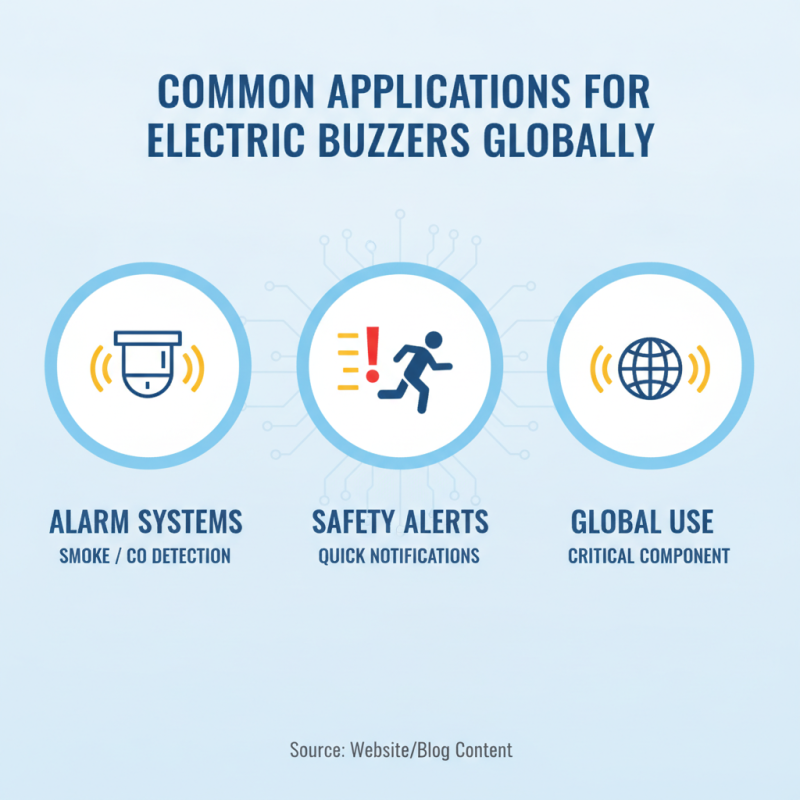
Electric buzzers are widely used in various applications across the globe. They serve as vital components in alarm systems, indicating issues like smoke or carbon monoxide detections. Their auditory signals can alert users quickly, making them essential for safety.
In consumer electronics, electric buzzers play a crucial role in user interfaces. For example, they provide feedback in devices like microwaves and washing machines. The sound assures users that a process is underway or completed. Despite their effectiveness, not all buzzers are created equal. Some may lack the clarity needed for specific environments, leading to confusion.
In automotive applications, these buzzers warn drivers of critical issues. They signal when a seat belt is unbuckled or when headlights are left on. However, the reliance on sound can sometimes be problematic. A buzzing sound may be missed in noisy environments. Thus, integrating visual alerts can enhance overall effectiveness. Understanding the balance between sound and environment is essential for optimal functionality.
Comparative Analysis of Circuit Designs in Different Regions
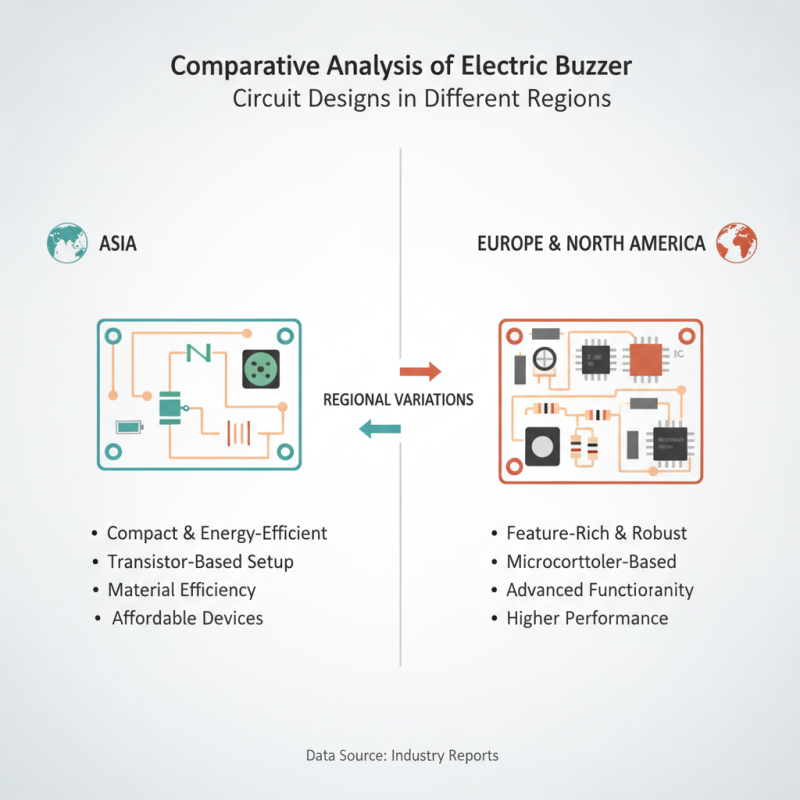
The design of electric buzzer circuits varies significantly across regions. In Asia, the focus tends to be on compact and energy-efficient designs. These circuits often utilize a simple transistor-based setup. Efficient use of materials is prioritized. This approach caters to the high demand for affordable electronic devices.
In contrast, European designs emphasize durability and compliance with safety standards. Higher quality components are frequently employed. These circuits may include advanced features like sound modulation. This complexity can lead to increased production costs. However, some argue that this investment is worth it for reliability.
A notable observation is that variations in regional regulation influence circuit design. Some regions favor innovation, while others may stifle it with strict guidelines. This creates a paradox where creativity struggles under bureaucracy. Manufacturers need to navigate these waters, balancing compliance with market demands. Such dynamics highlight the ongoing evolution in circuit design practices worldwide.
Purchasing Considerations for Global Buyers of Electric Buzzers
When considering electric buzzers for purchase, global buyers must evaluate several key factors. The most important is the application. Different buzzers serve varied functions like alerts, notifications, or alarms. The environment where these buzzers will be used also matters. For instance, some buzzers perform well in harsh conditions, while others are suited for indoor use.
Another consideration is sound output. Decibels can vary widely among models. Buyers should think about how loud the buzzer needs to be for effective use. Dimensions and interface also play critical roles. Compact designs might fit better in tight spaces. Buyers must ensure the power requirements align with their power sources.
**Tip:** Always request samples before bulk purchases. This allows for testing in real-world conditions.
Another practical tip is to explore compatibility with existing systems. Different buzzers may require specific wiring or voltage. Checking manuals or seeking expert advice can save future headaches.
Evaluating quality is essential. Reliability can vary, and subpar products may lead to failures. Including feedback from past users can provide insights and guide choices. It's crucial to be discerning and wise in this purchasing decision.
Global Electric Buzzer Sales Data in 2023
This chart represents the global sales volume of electric buzzers by region in 2023. It illustrates the differences in demand across various markets, providing insights for potential buyers.