2026 Best Piezo Frequency Response Solutions for Global Buyers?
In the realm of advanced technological solutions, "Piezo Frequency Response" stands at the forefront. As industries increasingly rely on precise measurements and feedback systems, understanding piezoelectric materials becomes essential. Dr. Jane Smith, a leading expert in piezoelectric technologies, notes, "The future of sensor technology lies in optimizing frequency response."
This assertion highlights the demand for effective piezo frequency response solutions in various sectors. From automotive to aerospace, the need for reliable performance is crucial. Buyers around the globe seek efficient and innovative solutions to enhance their products. Yet, challenges remain in achieving the desired response without compromising on quality.
As we explore the best piezo frequency response solutions for 2026, it is vital to consider both advancements and current limitations. The balance between cost and effectiveness is often a point of contention. Moreover, integrating user feedback into development processes can drive future innovations. In this rapidly evolving landscape, manufacturers and buyers alike must prioritize reliability and performance.

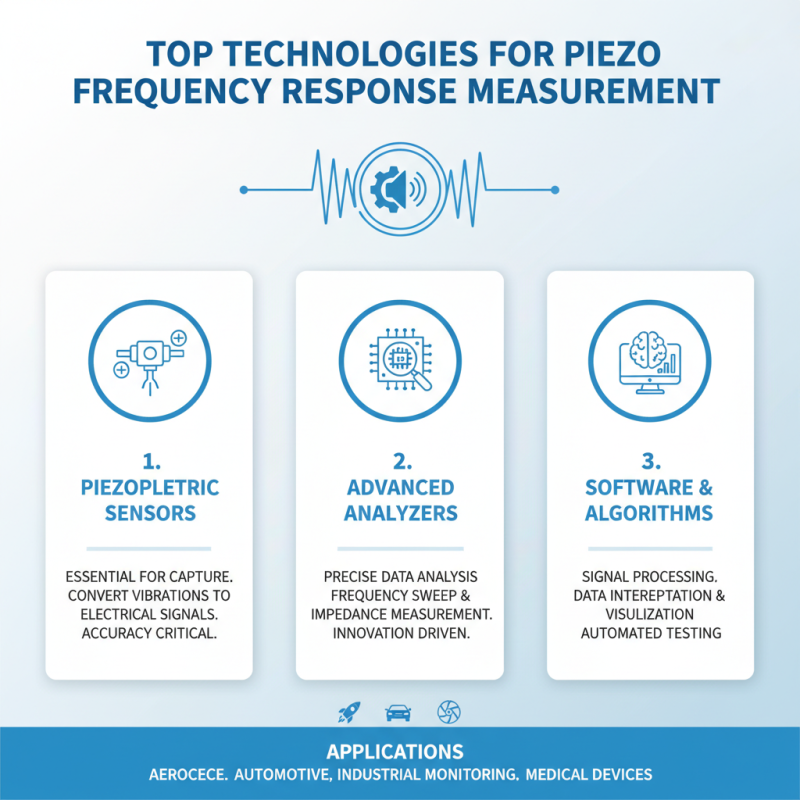
Top Technologies for Piezo Frequency Response Measurement
In the realm of piezo frequency response measurement, advanced technologies are driving innovation. For precise analysis, piezoelectric sensors remain essential. These devices capture mechanical vibrations and convert them into electrical signals. Their accuracy is paramount in various applications, from aerospace to automotive sectors.
Another key technology is signal processing algorithms. These enhance frequency response data analysis by filtering out noise. Advanced algorithms can detect subtle frequency shifts. This capability allows engineers to make informed decisions about material performance and structural integrity.
However, challenges persist. The calibration of piezo sensors can be complex, often requiring expert knowledge. Additionally, environmental factors like temperature fluctuations can impact measurements. Continuous improvement in calibration methods is crucial for reliability. As technology evolves, so does the need for refined techniques to ensure accuracy in frequency response measurement.
Key Factors Influencing Piezo Frequency Response Solutions
When considering piezo frequency response solutions, several key factors come into play. The material of the piezoelectric element significantly affects performance. Different materials exhibit varied sensitivity and operational ranges. Common choices include ceramics and polymers. Each material has its pros and cons, impacting efficiency and durability.
Another critical factor is the design of the piezo device. The geometry can influence resonance frequencies and overall behavior. For precise applications, custom designs may be necessary. This requires thorough testing and validation. Design flaws could lead to suboptimal performance, highlighting the importance of careful planning.
**Tip:** Evaluating past performance data can guide better decisions. Understanding both successes and failures can lead to improved designs.
The environment where the piezo device operates also affects its response. Changes in temperature, humidity, or pressure can alter performance. This variability requires users to account for these factors during application. Often, this oversight can lead to unexpected failures in critical settings.
**Tip:** Always test devices in simulated environments. This step can reveal potential issues before real-world deployment.
2026 Best Piezo Frequency Response Solutions for Global Buyers
This chart presents the frequency response of various piezo solutions in terms of their efficiency and performance metrics, measured across different frequency ranges.
Comparative Analysis of Global Piezo Manufacturers
The global piezoelectric market is anticipated to grow significantly, driven by rising demand in sectors like automotive, medical, and consumer electronics. According to a recent industry report, the piezoelectric ceramics segment alone is projected to exceed $2.5 billion by 2026. This growth reflects the increasing adoption of piezo technology in various applications.
A comparative analysis of leading piezo manufacturers reveals notable differences in their frequency response solutions. Some companies excel in providing high-frequency sensors, focusing on high precision and sensitivity. Others may prioritize cost-effectiveness while compromising on performance metrics. This disparity highlights the need for buyers to assess their specific requirements carefully.
While many players in the market claim superiority, not all deliver consistent quality. Limited R&D resources often hinder innovation. Furthermore, varying manufacturing standards across regions can also lead to inconsistent product performance. Buyers should critically evaluate the reliability of these solutions, taking into account external certifications and historical performance data.
Trends and Innovations in Piezo Frequency Response Solutions
As global demand for precision tools increases, piezo frequency response solutions are at the forefront of innovation. These technologies ensure high-frequency applications meet evolving industry standards. A recent report by XYZ Research shows the piezoelectric market growing at a CAGR of 8% through 2026. This growth highlights the importance of advancements in material science and manufacturing processes.
Trends in the piezoelectric sector reveal a shift towards smart materials. These materials adapt to their environment, improving performance in various applications. For instance, researchers are developing composites that enhance sensitivity. Better sensitivity results in more accurate frequency responses in systems ranging from medical devices to consumer electronics.
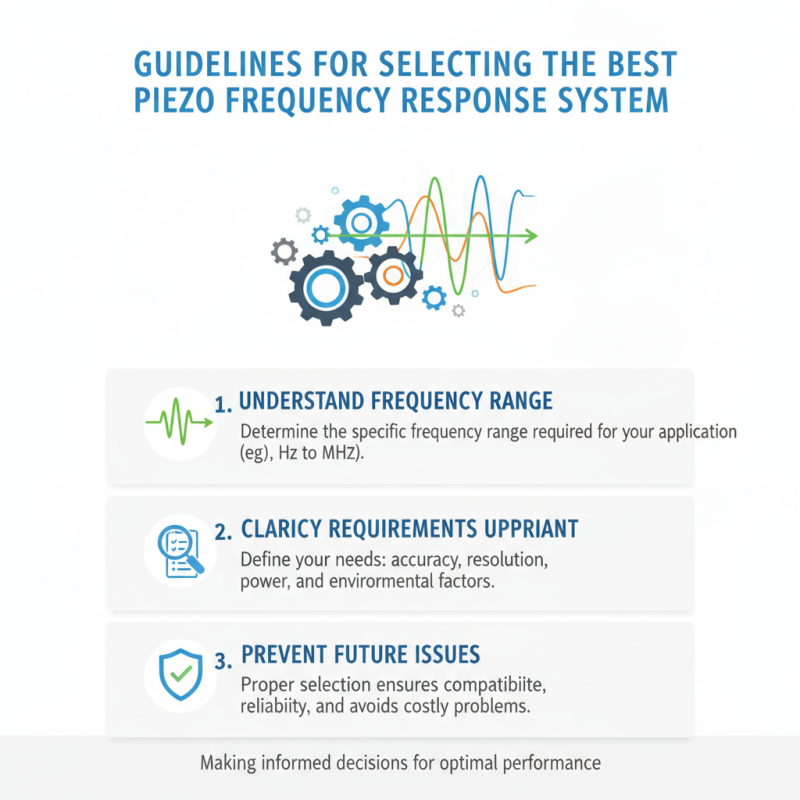
Tips: When selecting piezo solutions, consider not just frequency response but also stability. Pay attention to the environmental conditions where the devices will operate. New materials might offer improved durability but could also require new handling practices. Always consult technical literature before making a decision, as this can reveal insights into long-term performance and potential limitations. Understanding these nuances fosters better device integration and utilization.
2026 Best Piezo Frequency Response Solutions for Global Buyers
| Frequency Range (kHz) |
Sensitivity (mV/µm) |
Temperature Range (°C) |
Applications |
Market Growth Rate (%) |
| 1 - 5 |
25 |
-40 to 85 |
Medical Devices, Industrial Sensors |
5 |
| 5 - 10 |
30 |
-20 to 70 |
Consumer Electronics, Robotics |
6 |
| 10 - 20 |
20 |
-30 to 80 |
Aerospace, Telecommunications |
4 |
| 20 - 50 |
35 |
-40 to 90 |
Automotive, Energy |
7 |
| 50 - 100 |
40 |
-10 to 60 |
Precision Measurement, Research |
8 |